
case
akari
a matcha kiosk & book-share
concept
a small wooden kiosk serving ceremonial matcha, built around the japanese idea of akari (灯り) — warm, glowing light, the kind of light that comes from a lantern or a candle rather than a bulb. alongside the matcha counter, a shelf of shared books: take one, leave one. the place isn't trying to be a destination café — it's a warm pause on a street corner.
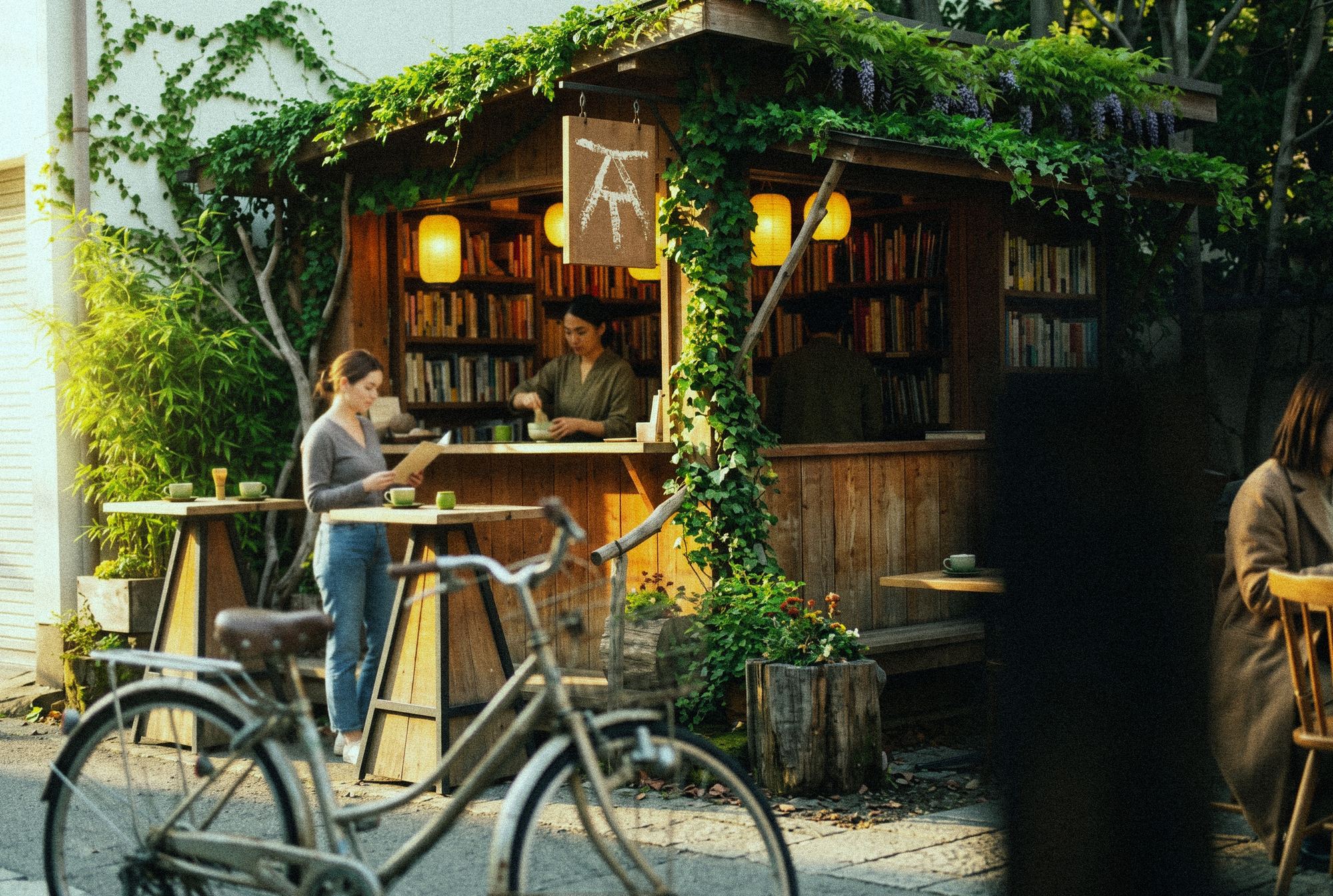
aesthetic direction
- wabi-sabi (侘寂): imperfect, worn, asymmetrical — uneven shelves, visible wood grain, nothing overly polished. this is deliberate, not unfinished.
- mottainai (もったいない): the philosophy behind the book-share — nothing sits unused. a book passed hand to hand gets a second life instead of gathering dust.
- engawa (縁側) as a spatial idea: the kiosk sits in-between indoor and outdoor, like a traditional veranda — people can linger at the edge without fully "entering."
- rooted in kissaten heritage (small showa-era japanese tea/coffee shops) rather than the grey-concrete-and-glass minimalism common in western matcha bars.
what it serves
ceremonial-grade matcha, prepared traditionally, small and confident menu (no long drink list, no syrups-first approach). warm lighting — lanterns or diffused paper-shade style (andon) — is part of the product, not just decor.
the book-share
a standing or built-in shelf, low-friction — no membership, no fees. reinforces the "place you return to" feeling and gives people a reason to stay rather than grab-and-go.
akari — a small light and a warm cup, wherever you need to pause